
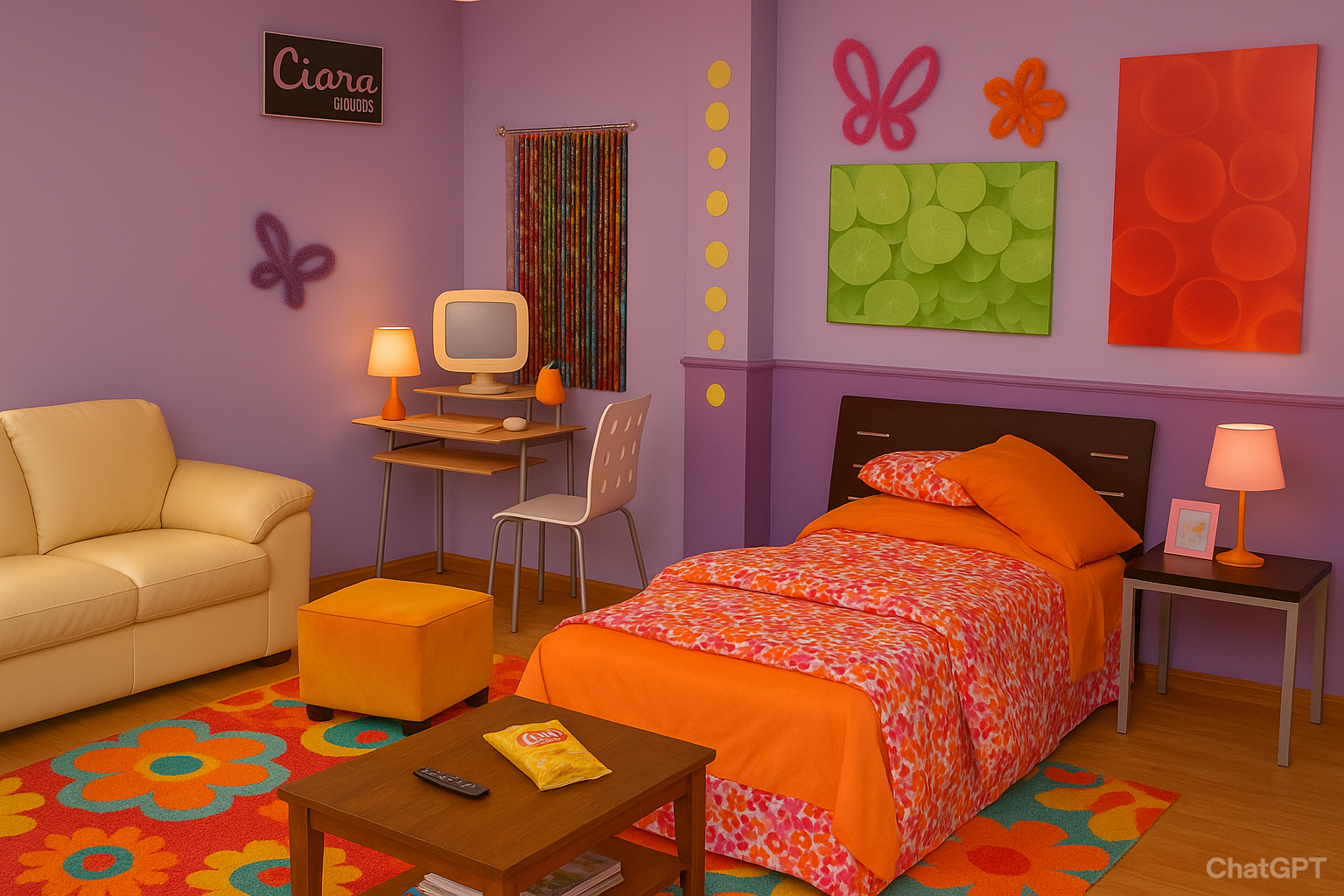
Other than the potential end of the world courtesy of the Millenium Bug, as we made our transition from 1999 into the year 2000, the noughties are typically remembered as a care-free era where we looked forward to what a new thousand year span could bring. If only we had known.
In the 2000s, the Internet expanded significantly while music, fashion and design hurtled on in an upbeat and colourful trajectory. Daily life had its challenges but there was a sense of renewed optimism and fun woven throughout the day-to-day.
One of the most obvious and familiar means by which we tapped into the positive noughties vibe was within our homes. Suddenly we were painting our walls with bright and unashamed colours and reaching for items with ease from open-plan shelving. We livened up our pads with zingy, bold patterns before clustering together on extravagantly curved sofas for the latest update from the Big Brother house.
The noughties were a stimulating mix of an older analogue world paired with fresh hope for what lay ahead in the new millenium.
Now, in 2025, those same noughties interior trends are re-emerging. Their sneaky comeback has arrived thanks to many of us craving a much-needed dose of fun to counterbalance the gloom of economic decline, corrupt politics, climate change and the ever-increasing cost-of-living. Having some fun back is long overdue!
Here we delve into the key interior trends that shaped the noughties while also exploring how to incorporate fun-filled Y2K extravagance into your home. And call us biased but, with such a bold regression into the best of noughties interiors, your carpet choice can really make or break the look.
Bright, joyful noughties colour
"Meet the antithesis of stark 2020s minimalism"
While the minimalist aesthetic of the 2020s serves as a practical and unobtrusive backdrop to modern, hectic and pressured life, sometimes the muted nature of neutral tones, orderly lines and limited belongings doesn’t necessarily remind us to be playful.
In fact, the minimalist look has become so incredibly popular of late that it can be easy for your home to feel like your friend’s home, and your Uncles’s home, and practically everybody else’s home. Colour, individualism and pattern appear to have been cast out of the window in favour of neutral blankets, inoffensive objects and ‘Live, Laugh, Love’ written upon every available blank surface. After a few years, it’s beginning to get a bit samey-same.
Cue a return to the noughties with its bright and brash colour palettes that can’t help but make you smile. You might not be able to prevent the next political scandal or avoid yet another onslaught of raised prices but you can delight in zingy shades of bright lime, tangerine and hot pink instead of a stark clinical finish and sweeping absence of colour.
As the world descends into spiraling debt and pessimism threatens to seep into every element of daily life, harnessing the upbeat kitsch of the noughties in your home might feel intimidating but it could well prove a surprisingly effective shutter to the worst out there.
If you worry that embracing mood-boosting hues might equal interior overload, fear not for it is simply a matter of striking a balance between playful doses of colour, neutral flooring and futuristic accents via fun accessories.
For example, if you adore the passion, positivity and bravery of red - one of the favoured colours of the noughties - opting for carpet in khaki or stone inspired shades can work incredibly well. Adding accents of green and deep pink can then add depth and variety to the room without conflicting too much with the primary shade of red.
In a colour scheme like this, dark wooden furniture can help anchor the ambition of the overall look while a modern yet classy finish can be added with gold metallic highlights through elements such as lighting, metal sculpture, pictureframes, mirrors and artwork.
The Fun of Furniture
"Embrace function fused with a whole load of personality"
The furniture of the 2000s was fun, charismatic and so incredibly quirky that you just couldn’t miss it. You didn’t just have a chair. You had a colourful seat in a remarkably bright colour made of an unexpected material that swanked in its own uniqueness and character. Ikea blue and cream wood were all the rage, as demonstrated by this Ikea catalog from 2000.
You weren’t just sitting down. You were having a rebellion as to what a chair even was and having a jolly good time as you did so. There were numerous materials to choose from - transparent plastic, see-through carbon-fiber weave, clear polycarbonate that looked like glass, steel, aluminium, wood or fabric.
You could have a conventional cloth cover on a padded armchair or opt for a more defiant finish such as luxurious Australian shearling. Anything went as long as it was fun. In effect, you were saying ‘I’ll have a plastic chair inflated with air rather than padding and have a contented smile while I sit upon it’.
In the 2000s, we enjoyed the practical nature of furniture in tandem with playful, experimental design. The many chairs of the diary room of the Big Brother house during the 2000s facilitated us tuning into much anticipated housemate gossip while the chairs themselves were artistic, unforgettable characters in their own right. Which is exactly why experts say early 2000s is all coming back.
Even the contours of noughties furniture broke convention as we replaced straight lines and neat corners with unexpected shapes and much more curvaceous silhouettes. Our sofas were no longer squared off but instead invited us to lounge a while amid their sumptuous upholstery and curved outline.
While furniture surprised and entertained, noughties shelving opened right up. We no longer hid our dishes, jars and trinkets in predictably square cupboards but instead upon easy-access planks attached to the wall and storage units that arrived in the post as IKEA flatpack kits. The tradition of hiding belongings in cupboards seemed practically archaic alongside the ease that had been introduced by all that spontaneous yet purposeful furniture.
Patterned and eclectic rugs abound
"Utilise a spot of energetic print upon the floor"
While simple carpets and subtle flooring wove a necessary degree of neutrality into loud and proud noughties interiors, a completely blank foundation beneath our feet would have proven a little too bland for the keenly adventurous design tastes of the 2000s.
While a rug is most usually a small component in a room’s overall decor, rugs can be surprisingly adept at adding a soft element to an otherwise hard space while also able to effectively draw attention to a chosen spot in the room.
Despite the brazen colours upon the walls and the highly unusual furniture, noughties rugs were more than able to hold their own thanks to their confident, novelty prints. The rugs of the 2000s were not shy thanks as they brought a touch of leopard print, marble patterning, geometric shapes, patchwork effects and bold florals to our homes. We've gone with the same mantra in designing our carpets, but with an integrated element of dignity.
Rugs were as bold as all the other elements around them in the room. However, they were never added in an unconsidered way or they could have detracted too much from the overall look and feel of a room.
Instead, the colours of the patterns cleverly harmonised with other features around them or the rug was composed of an ambitious, luxurious fabric to avoid adding more visual noise to the room.
In the 2000s, most homeowners invested in a high-quality rug that had been crafted by a celebrated designer and could fit into a distinctly bold interior. Much like the curvaceous couches and rounded edges to many components of the room, circular rugs were particularly popular in homes of the noughties. Many noughties rugs came finished with statement tufts, for that final flourish of Y2K fun.
Of course, we look back on all of this with a grin - but it doesn't have to remain in the past. There's plenty of vibrant noughties tints you can find through our carpets' range.